UNPUB MENTORSHIP & GEN CON
This summer has a surprising development! While getting feedback from local game designers, I was pointed to the Unpub Tabletop Mentorship Program. Unpub is a free program that pairs you with an experienced professional from the Tabletop Gaming industry. You meet bi-weekly and focus on specific goals that can relate to game mechanics, art & design, marketing, production— any particular area that you struggle with. Your mentors are chosen based on your subject of focus.
I applied right away! In an incredible stroke of luck, I was paired with the seasoned Cardner Babakitis, game designer at Odd Candy and product manager with Buried Giant Studios. Cardner was a previous mentee with Unpub and is now paying it forward, bestowing me with her many wisdoms.
My focus has been on the manufacturing end of game design, with some tangents here and there. It has been a process learning the lingo and product specifications. Here are some key takeaways from my sessions so far:
Self-Publishing vs. Publisher Partnership
My first point of reference for producing a tabletop game was self-publishing with Kickstarter, but I am learning that there are many ways to bring your game to life. One of those other options is working with a publisher. Publishers can help with distribution and funding in exchange for a share of revenue. They can also make larger print runs possible, which opens up options for working with manufacturers with large minimum production (1000 units).
“Indie Markets” are another route. These are held at big and small conventions as well as local in-person tabling events like craft shows and farmers markets. It lends itself well to bespoke games and smaller print runs that are not as reliant on major sources of funding.
With a better understanding of the production process and all the moving pieces, I can make a more informed decision on which path is best.
Standard Practices for Greener Manufacturing
We have much better choices nowadays for making things that use less energy and are more ethically sourced. Here are two incredibly helpful resources that I learned about:
This guide shares best practices sorted by material with case studies that make it easy for anyone to design and support more sustainably produced tabletop games.
This highly comprehensive list offers reviews so that you don’t feel like you are going in completely blind. On top of that, it shows you if the manufacturers carry certain common certifications.
The nice thing about card games is that it has simple components and few material requirements. The packaging and finishes are the kicker. UV coatings and plastic-based polymer lamination can add to the cycle of waste by making your game components non-recyclable or non-compostable. Water-based veneer coating and vegetable inks are the solution. Packaging should use paper instead of plastic when possible and then where shrink wrap is necessary, opting for compostable shrink wrap.
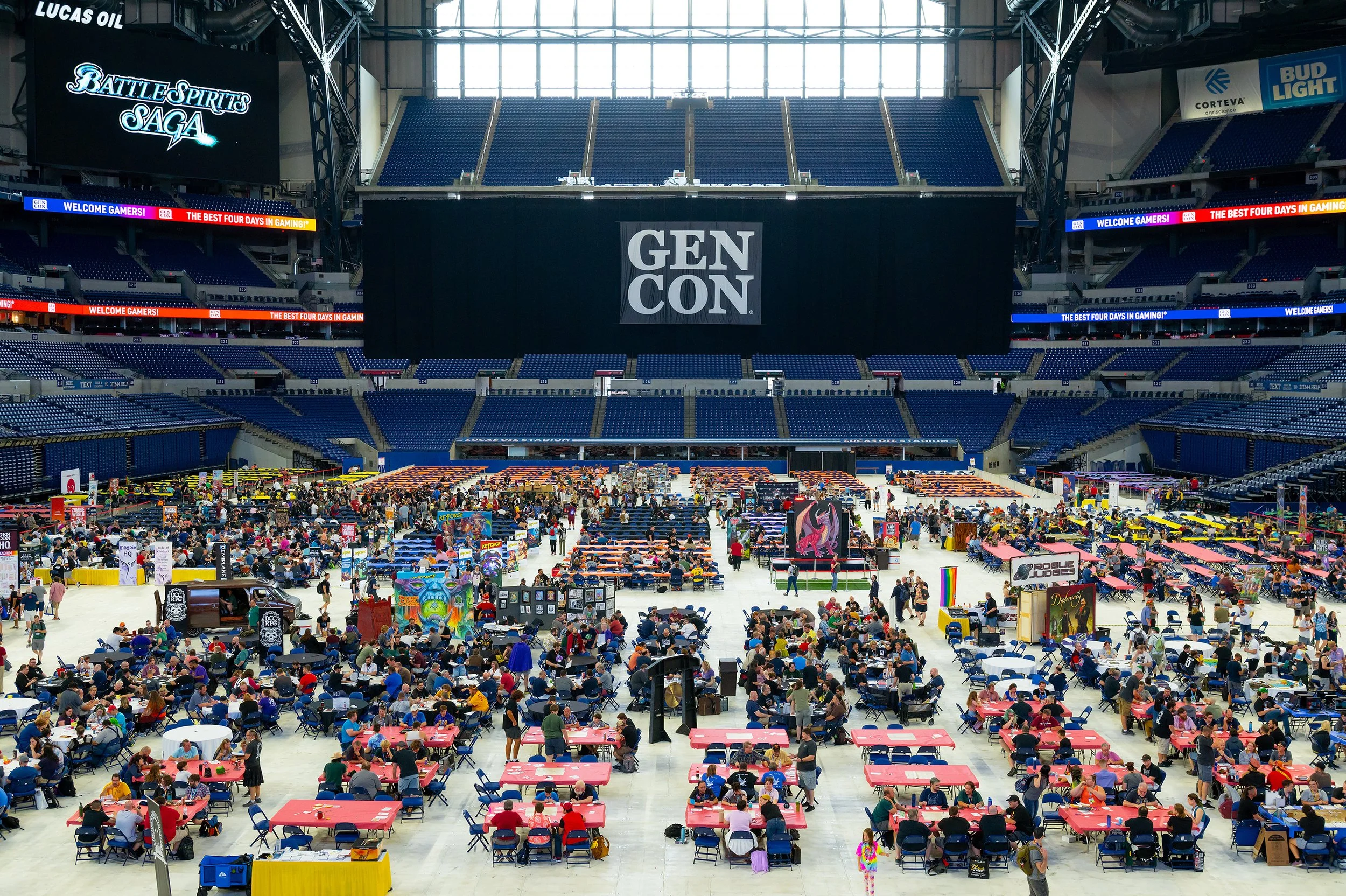
2023 Gen Con Attendees in Lucas Oil Stadium. By Jrdn44 - Own work, CC BY-SA 4.0, https://commons.wikimedia.org/w/index.php?curid=151036061
Gen Con is the largest tabletop gaming convention in North America, held in Indianapolis from July 30-August 2. No, you don’t need to go to the biggest convention to make your way into the industry. But, when the opportunity presents itself to attend, then go I say! And so I shall!
I will be working at a booth for part of the convention and getting lost the rest of the time. My trusty Shrumans will be in my pocket for the journey and upon my return, there will be many stories I am sure. Wish me luck!